Zero liquid discharge (ZLD) and similar solutions including minimized liquid discharge (MLD) are anticipated to play a more prominent future role in industrial water treatment across the globe. Ahead of the Industrial Water Solutions Forum in Singapore, this article looks at why a greater focus on environmental protection and water security is leading to a greater adoption of these technologies across multiple industries.
Booming megatrends in urbanisation and industrialisation are creating greater stress on the environment, including the world’s freshwater resources. In many areas globally - and particularly in fast-developing and emerging economies - rapid growth in manufacturing and industry presents a threat to water quality and puts tremendous strains on water supplies. Concerns related to water availability risks are heightened in regions prone to water scarcity.
As these trends escalate, industries that use vast amounts of water and generate significant quantities of wastewater are under mounting pressure to adopt more sustainable water management strategies that use less water, minimize impacts to receiving waters, and mitigate operational risks. This in turn is driving advancements that leverage technology in the global water treatment market.
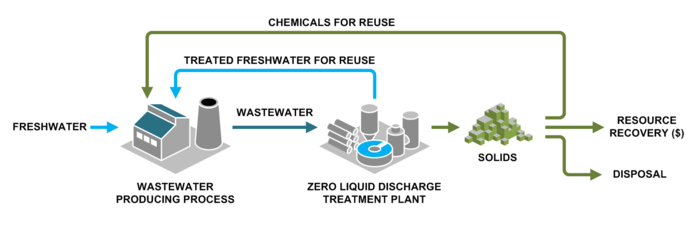
ZLD and comparable approaches such as MLD are attracting greater interest as beneficial water treatment/water management solutions for difficult-to-treat industrial wastewater.Both strategies employ a sequence or “treatment train” of advanced treatment processes and technologies for maximizing water recycling and minimizing wastewater volumes. ZLD, however - by incorporating a final robust evaporation/crystallization stage - aims to completely eliminate all produced wastewater, reducing waste liabilities and decreasing discharge to the greatest extent allowable.
In recent years, even as industrial economies continue to expand and produce greater volumes of contaminated wastewater, more agreement is being reached internationally in terms of the necessity to safeguard the environment from pollution. This mindset represents a major shift from historical views and is helping to build more support for programs and policies that encourage best practices and innovative solutions for protecting ecosystems, conserving water supplies, and improving water quality.
Based on a rapid evolution in the acceptance of advanced technologies and increasing recognition of the value of sustainable-focused approaches, greater momentum is emerging worldwide across the industrial landscape for water treatment solutions such as ZLD and MLD that minimise waste, recover resources, treat toxic industrial waste streams more effectively, and mitigate potential water quality impacts to receiving waters.
Industrial ZLD and MLD adoption is also being driven by rising global water stress and mounting risks to industries that depend on consistent water supplies. Water-shortage risks are especially severe for operators located in water-stressed areas and for industries with water-intensive processes such as food and beverage, power, and pulp and paper.
By “closing the loop” and enabling for treated water to be recycled and reused in process operations - or in other industrial applications that require water - ZLD and MLD offer a proven technical water management strategy for mitigating water-shortage risks by boosting water efficiency and reducing water intake requirements. For industrial operators in water-restricted areas, this benefit can help insulate industrial operators from escalating source water costs.
ZLD in particular, with the capacity to treat the most challenging wastewater and virtually eliminate all discharge, is attracting rising interest as an effective and best available process for managing contaminated waste streams produced by industries such as power, chemical, steel, textile, electroplating and others as more regulatory focus is directed at the largest environmental polluters.
As an example, the U.S. Environmental Protection Agency (EPA) recently issued new Effluent Limit Guidelines (ELGs) for the steam electric power generating category, requiring ZLD for all pollutants associated with fly ash transport water, bottom ash transport water and flue gas mercury control (FGMC) wastewater in power plants that are 50 megawatts (MW) or higher.
As these trends escalate, industries that use vast amounts of water and generate significant quantities of wastewater are under mounting pressure to adopt more sustainable water management strategies that use less water, minimize impacts to receiving waters, and mitigate operational risks. This in turn is driving advancements that leverage technology in the global water treatment market.
ZLD and comparable approaches such as MLD are attracting greater interest as beneficial water treatment/water management solutions for difficult-to-treat industrial wastewater.Both strategies employ a sequence or “treatment train” of advanced treatment processes and technologies for maximizing water recycling and minimizing wastewater volumes. ZLD, however - by incorporating a final robust evaporation/crystallization stage - aims to completely eliminate all produced wastewater, reducing waste liabilities and decreasing discharge to the greatest extent allowable.
Drivers for adoption
Based on a rapid evolution in the acceptance of advanced technologies and increasing recognition of the value of sustainable-focused approaches, greater momentum is emerging worldwide across the industrial landscape for water treatment solutions such as ZLD and MLD that minimise waste, recover resources, treat toxic industrial waste streams more effectively, and mitigate potential water quality impacts to receiving waters.
Water intense processes
Industrial ZLD and MLD adoption is also being driven by rising global water stress and mounting risks to industries that depend on consistent water supplies. Water-shortage risks are especially severe for operators located in water-stressed areas and for industries with water-intensive processes such as food and beverage, power, and pulp and paper.
By “closing the loop” and enabling for treated water to be recycled and reused in process operations - or in other industrial applications that require water - ZLD and MLD offer a proven technical water management strategy for mitigating water-shortage risks by boosting water efficiency and reducing water intake requirements. For industrial operators in water-restricted areas, this benefit can help insulate industrial operators from escalating source water costs.
ZLD in particular, with the capacity to treat the most challenging wastewater and virtually eliminate all discharge, is attracting rising interest as an effective and best available process for managing contaminated waste streams produced by industries such as power, chemical, steel, textile, electroplating and others as more regulatory focus is directed at the largest environmental polluters.
As an example, the U.S. Environmental Protection Agency (EPA) recently issued new Effluent Limit Guidelines (ELGs) for the steam electric power generating category, requiring ZLD for all pollutants associated with fly ash transport water, bottom ash transport water and flue gas mercury control (FGMC) wastewater in power plants that are 50 megawatts (MW) or higher.