- To save costs and reduce the capacity needed, comprehensive water audits are usually performed which also ensure that the system deals only with the most polluting streams.
- Installing ZLD technology is therefore often beneficial for the plant’s water management; encouraging close monitoring of water usage, avoiding wastage and promotes recycling by conventional and far less expensive solutions.
- High operating costs can be justified by high recovery of water (>90- 95%) and recovering of several by products from the salt.
- A more sustainable growth of the industry while meeting most stringent regulatory norms.
- Possibility of use of sewage for recovery of water, for Industrial and municipal use, using ZLD technologies.
- Reduction in water demand from the Industry frees up water for Agriculture and Domestic demands.
Wednesday, June 20, 2018
Zero Liquid Discharge Benefits

Challenges of Zero Liquid Discharge
- Zero Liquid discharge Is the Holy Grail of Industrial wastewater Treatment.
- ZLD results in generation of hazardous solid wastes creating disposal challenges- need to think of Zero Waste Disposal (ZWD) Plants.
- Generate products/ by-products out of the waste.
- Economic viability- cost and availability of water, regulatory pressure are the real driving force.
- High Carbon foot print- is this environmentally sustainable?
- High Operating cost and financial impact on the industry and its Regional/ National/Global competitiveness.
- Technology shortcomings.
Zero Liquid Discharge Treatment Plants
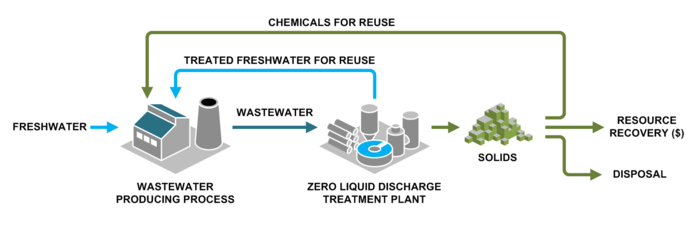
There has been increased attention on ZLD technologies in the news over the past two years. New regulations and awareness of the water crisis have prompted businesses to adopt new technologies which treat waste water in ways that are more efficient and sustainable. ZLD, or Zero Liquid Discharge, are technologies which concentrate waste water until only solids and reusable “clean” water remains or, more broadly, which produce a “close to zero” amount of liquid waste.
 |
| Zero Liquid Discharge Plant by Austro Water Tech |
Since ZLD technologies recover all, or almost all, of the waste water produced by an industrial process, they contribute to sustainable manufacturing practices and decrease the environmental impact of businesses. They also have economic advantages, such as:
- minimizing the cost of sourcing freshwater and disposing of waste,
- providing added value because valuable resources can be recovered from the “waste.”
ZLD technology maximizes the fresh water recovered and minimizes the volume of waste generated; however, there are trade offs. Conventional ZLD systems are based on thermal methods such as evaporators and crystallizes, which are expensive and use considerable energy. To increase the viability of ZLD technologies for both the environment and businesses, they must be further improved to minimize the amount of energy consumed by the treatment process.
One way to save energy is to reduce the amount of waste water which needs to be treated using heat. This can be done by using volume reduction technology. Another way to save energy is to operate the treatment system at a constant temperature throughout the process. Most of the traditional volume reduction technologies do not work at high temperatures, which means that the waste water has to be cooled and then reheated during the treatment process. However, some new technologies do work at high temperatures.
Nano scale ceramic membranes capable of de watering are an example of a volume reduction technology that can operate at high temperatures, unlike polymer membranes. Heat resistant ceramic filters make the use of heat ex changers for the final thermal concentration step unnecessary. This reduces the total energy use of the ZLD system.
It makes no sense to use ZLD technology if the advantages of the recoverable water and resources are offset by the disadvantage of the energy use necessary for the process. Emerging nano-ceramic technologies make ZLD more energy efficient and allow more businesses to take advantage of this cost-saving and sustainable process technology.
Saturday, June 17, 2017
Effluent Treatment Plant
The harmful compounds in the effluent can impact the procedures that deal with the effluent. This impact can be lowered by watering down the hazardous effluent by blending it in equalization ponds with effluent that has lower harmful structure.

When you create your effluent treatment plant you need to ensure you take into consideration some crucial aspects associating with the qualities of the effluent. In this short article, I am going to inform you exactly what these elements are.
You likewise have to consider some physical attributes of the effluent, while creating your plant. These are the color of the effluent, the solids in it, its temperature level and smell. The existence of suspended solids show poor quality of effluent that will be challenging to deal with.
The deficiency of water is another crucial aspect to be thought about; if it is limited or there's a risk of water ending up being limited in future, or if underground water or soil risks of being contaminated, much better treatment strategies ought to be thought about.
It can likewise impact the solubility of crucial gases like oxygen. A greater temperature level of the effluent assistances different responses as well as promotes the solubility of oxygen in the effluent.
These suspended solids likewise increase the turbidity of the effluent from market. They likewise contribute to the amount of silt that gets transferred in the treatment plant. You need to eliminate them either through purification or through settling in sedimentation tanks.
Once again, the inflow is most likely to be higher throughout the rainy season. You would require to support such inflow and make it continuous or near consistent so as to safeguard the performance of treatment procedures downstream.
Existence of substantial percentage of inorganic chemicals, heavy metals, toxic substances, and so on will need unique treatment procedures.
You need to likewise integrate in your style the approximated boost in the inflow of effluent in the foreseeable future. Or, a minimum of, the Plant ought to be constructed scalably.
Another essential element you have to consider in the style of your effluent plant is the temperature level of the effluent. An undesirable temperature level can hinder the essential biological and chemical procedures.
You can pick how big your effluent treatment plant need to be depending upon the approximated inflow into the plant which is normally approximated in cubic meters each day nearly the world over. It is needed for you to get the best price quotes of variations in the inflow in order to get the hydraulic calculations. This is likewise essential to assist figure out properly the size of communicating channels and pipelines.
The strong particles can include grease, drifting particles or oil slicks therefore suggesting the lack of any type of pre-treatment of the effluent.
If the effluent temperature level hovers around 35 degrees C, the microbiological activity can either slow down or end up being non-active. Often, constructing the Plant listed below the ground, or including anaerobic food digestion might assist preserve a greater temperature level.
The effluent qualities that you need to think about while creating your treatment plant are the circulation of the effluent, together with biological, physical and chemical homes that can impact the quality of effluent.
2 other elements you should think about are the smell and color of the effluent; these might suggest the lack of any type of pretreatment of the effluent prior to release into the sewage network.
You can choose on how big your effluent treatment plant ought to be depending on the approximated inflow into the plant which is normally approximated in cubic meters per day practically the world over. The harmful compounds in the effluent can impact the procedures that deal with the effluent. You likewise require to take into account some physical qualities of the effluent, while creating your plant. These are the color of the effluent, the solids in it, its temperature level and smell. These suspended solids likewise increase the turbidity of the effluent from market.
It will need a higher degree of treatment and boost intricacies in style if the effluent wastewater is of low quality.
To Know More About Effluent Treatment Plant Visit Here: http://austrowatertech.com

When you create your effluent treatment plant you need to ensure you take into consideration some crucial aspects associating with the qualities of the effluent. In this short article, I am going to inform you exactly what these elements are.
You likewise have to consider some physical attributes of the effluent, while creating your plant. These are the color of the effluent, the solids in it, its temperature level and smell. The existence of suspended solids show poor quality of effluent that will be challenging to deal with.
The deficiency of water is another crucial aspect to be thought about; if it is limited or there's a risk of water ending up being limited in future, or if underground water or soil risks of being contaminated, much better treatment strategies ought to be thought about.
It can likewise impact the solubility of crucial gases like oxygen. A greater temperature level of the effluent assistances different responses as well as promotes the solubility of oxygen in the effluent.
These suspended solids likewise increase the turbidity of the effluent from market. They likewise contribute to the amount of silt that gets transferred in the treatment plant. You need to eliminate them either through purification or through settling in sedimentation tanks.
Once again, the inflow is most likely to be higher throughout the rainy season. You would require to support such inflow and make it continuous or near consistent so as to safeguard the performance of treatment procedures downstream.
Existence of substantial percentage of inorganic chemicals, heavy metals, toxic substances, and so on will need unique treatment procedures.
You need to likewise integrate in your style the approximated boost in the inflow of effluent in the foreseeable future. Or, a minimum of, the Plant ought to be constructed scalably.
Another essential element you have to consider in the style of your effluent plant is the temperature level of the effluent. An undesirable temperature level can hinder the essential biological and chemical procedures.
You can pick how big your effluent treatment plant need to be depending upon the approximated inflow into the plant which is normally approximated in cubic meters each day nearly the world over. It is needed for you to get the best price quotes of variations in the inflow in order to get the hydraulic calculations. This is likewise essential to assist figure out properly the size of communicating channels and pipelines.
The strong particles can include grease, drifting particles or oil slicks therefore suggesting the lack of any type of pre-treatment of the effluent.
If the effluent temperature level hovers around 35 degrees C, the microbiological activity can either slow down or end up being non-active. Often, constructing the Plant listed below the ground, or including anaerobic food digestion might assist preserve a greater temperature level.
The effluent qualities that you need to think about while creating your treatment plant are the circulation of the effluent, together with biological, physical and chemical homes that can impact the quality of effluent.
2 other elements you should think about are the smell and color of the effluent; these might suggest the lack of any type of pretreatment of the effluent prior to release into the sewage network.
You can choose on how big your effluent treatment plant ought to be depending on the approximated inflow into the plant which is normally approximated in cubic meters per day practically the world over. The harmful compounds in the effluent can impact the procedures that deal with the effluent. You likewise require to take into account some physical qualities of the effluent, while creating your plant. These are the color of the effluent, the solids in it, its temperature level and smell. These suspended solids likewise increase the turbidity of the effluent from market.
It will need a higher degree of treatment and boost intricacies in style if the effluent wastewater is of low quality.
To Know More About Effluent Treatment Plant Visit Here: http://austrowatertech.com
Subscribe to:
Posts (Atom)
Water Treatment and Recycling Technology
With an ever growing population and also better usage in both farming as well as commercial use, water has become an important produ...
